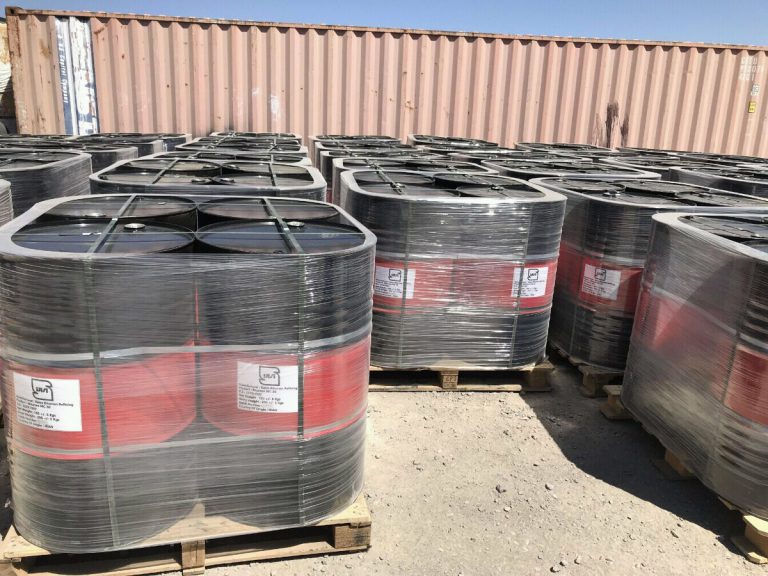
General Description of Cationic Bitumen Emulsion K3
Bitumen Emulsion K3 cationic bitumen emulsion (medium setting) road emulsion that contains 56% bitumen, is black in color and is manufactured strictly as per KS 02-769: 1990 standard.
Bitumen Emulsion K3 are cold applied, liquid bitumen emulsions, used in the construction and repair of pavements, driveways, roads, and highways.
Uses of Cationic Bitumen Emulsion K3
Bituminous-aggregate mixtures
For pavement bases and surfaces:
- Plant mix (cold): with both dense-graded aggregate and sand
Mixed-in-place:
- Dense-graded aggregate
- Sand
- Sandy Soil
- Slurry Seal
Bituminous applications
- Fog Seal
- Prime coat-penetrable surface
- Tack coat
- Dust Binder
- Mulch Treatment
- Crack Filler
*May dilute with water by manufacturer or contractor per state regulation. Refer to the specifying agency.
Cationic emulsions may be used at ambient temperatures with aggregates, which need not be completely dry. Emulsions are less hazardous to use and can be applied in a wider range of conditions.
Application Conditions of Cationic Emulsion Bitumen K3
Bitumen Emulsion K3 must only be applied in dry, frost-free conditions which will remain throughout the film drying period. Temperatures of between 5°C and 35°C should prevail.
Before application drums should be well rolled to agitate contents before use. Cationic emulsions should be applied by brushing with hand broom or squeegee. Spread in one direction only and avoid scrubbing often. It is more practical to apply by spray as this provides a uniform distribution and even film. Spray equipment should conform to BS3136: Specification for Cold Emulsion Spraying Machines for Roads.
Spray evenly to avoid ponding in hollows as this may cause localized “fatting up” of the subsequent courses.
Preparation:
All surfaces must be dry and free from dust, oil, grease, fuel spillage, mud, leaves, etc. In hot weather, it may be advisable to dampen the surface with water in order to retard the loss of water from the emulsion as it cures and to ensure better wetting of the surface by the emulsion. It is essential that the surface is free of standing water prior to and during application.
Packing of Cationic Emulsion Bitumen K3
Bitumen Emulsion K3 is available in:
- Bulk as IBC Tank, Flexi Tank
- Reconditioned steel drums 200 lit.
- New steel drums 200 lit.
Technical Data Sheet of Cationic Bitumen Emulsion K3
| No |
Property |
Result |
| 1 |
Particle charge |
Pos. |
| 2 |
Residue on 710 um KS sieve (%)(m/m), maximum |
0.05 |
| 3 |
Residue on 150 um KS sieve (g per 100 mL), maximum |
0.15 |
| 4 |
Binder content (%)(m/m), minimum |
57 |
| 5 |
Viscosity (degrees Engler (°E) at 20°C |
10 max |
| 6 |
Viscosity redwood No. II (s at 85°C) |
– |
| 7 |
Storage stability (long period test) % water content difference, maximum |
2 |