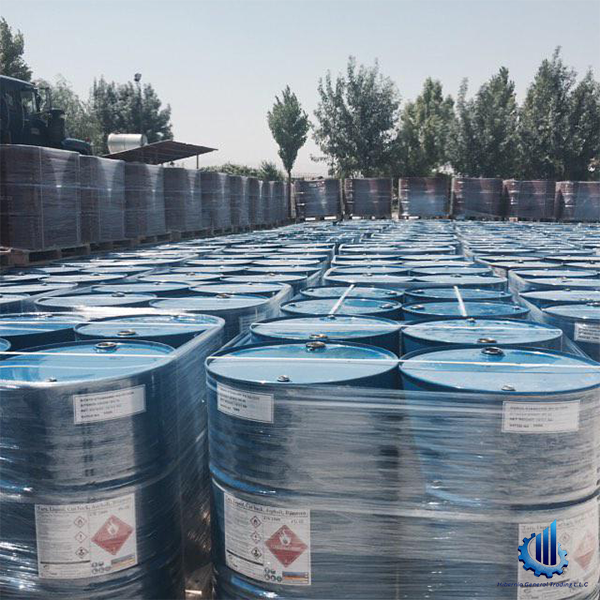
Cutback Bitumen RC-30 is a rapid-curing cutback asphalt produced by blending penetration grade bitumen with a volatile petroleum solvent such as gasoline or naphtha. This formulation reduces the viscosity of the bitumen, allowing it to remain liquid at ambient temperatures and significantly improving its ability to penetrate, spray, and coat aggregates without the need for heating.
RC-30 belongs to the Rapid Curing (RC) class of cutback bitumens, where the solvent evaporates quickly after application, leaving behind a cohesive asphalt residue.
Definition and Material Characteristics
Cutback Bitumen RC-30 is manufactured from petroleum grade bitumen obtained through fractional and vacuum distillation of crude oil. The base bitumen is blended with a carefully controlled percentage of highly volatile distillates, typically gasoline or naphtha, to achieve rapid curing characteristics.
Key characteristics of RC-30 include:
-
Low viscosity at ambient temperatures
-
Rapid evaporation of solvent after application
-
Fast development of bonding strength
-
Excellent penetration into granular surfaces
Cutback asphalts can contain 12% to 40% distillate, and specifications allow up to 45% distillate for rapid-curing grades such as RC-30.
Meaning of RC-30 Classification
The designation RC-30 represents:
This classification makes RC-30 particularly suitable for spray applications and surface treatments where quick setting and early strength are required.
Performance Characteristics
Cutback Bitumen RC-30 is characterized by:
-
Very rapid curing due to fast solvent evaporation
-
High penetration capability into base and sub-base layers
-
Strong adhesion to mineral aggregates
-
Good rheological behavior after curing
-
Reliable performance in spraying and light mixing applications
Because of environmental regulations and solvent emissions, the use of cutback bitumen has declined globally; however, RC-30 remains valuable for specific applications requiring rapid setting.
Applications of Cutback Bitumen RC-30
Cutback Bitumen RC-30 is commonly used in:
-
Penetrating prime coats
-
Surface treatment and spraying applications
-
Patching and stockpile asphalt mixtures
-
Cold mix asphalt for maintenance works
When used in mixing with aggregates, RC-30 is often combined with adhesion agents to enhance coating efficiency and bonding strength.
Safety, Handling, and Environmental Considerations
Due to the presence of volatile solvents, special safety precautions must be observed when handling Cutback Bitumen RC-30:
-
Refer to the Safety Data Sheet (SDS) before use
-
Store, transport, and apply at the lowest practical temperature
-
Eliminate all potential ignition sources during application
-
Avoid inhalation of vapors and contact with skin
-
Always use appropriate personal protective equipment (PPE)
-
Prevent discharge into stormwater, soil, or sewer systems
Proper handling is essential to ensure safety and environmental protection.
Packing and Supply
Cutback Bitumen RC-30 is supplied in:
Packaging options are designed for both large-scale road projects and maintenance operations.
Technical Specification – Cutback Bitumen RC-30
Standard: ASTM D2028-97 (Reapproved 2004)
| Property |
Min |
Max |
Test Method |
| Kinematic Viscosity @ 60°C, cSt |
30 |
60 |
ASTM D2170 |
| Flash Point (Tag Open Cup) |
— |
— |
ASTM D3143 |
| Distillation Test |
|
|
ASTM D402 |
| Distillate to 225°C, % vol |
55 |
— |
ASTM D402 |
| Distillate to 260°C, % vol |
75 |
— |
ASTM D402 |
| Distillate to 316°C, % vol |
90 |
— |
ASTM D402 |
| Residue from Distillation to 360°C, % vol |
50 |
— |
ASTM D402 |
| Tests on Residue |
|
|
|
| Penetration @ 25°C (100 g, 5 s) |
80 |
120 |
ASTM D5 |
| Ductility @ 25°C, cm |
100 |
— |
ASTM D113 |
| Solubility in Trichloroethylene, % |
99 |
— |
ASTM D2042 |
| Water Content, % vol |
— |
0.2 |
ASTM D95 |
Conclusion
Cutback Bitumen RC-30 is a rapid-curing asphalt binder designed for penetrating prime coats, spraying applications, and maintenance mixes where quick setting and early bonding are required. Its low viscosity, fast curing behavior, and strong aggregate adhesion make it an effective solution for specific pavement construction and maintenance needs, provided that proper safety and environmental controls are strictly observed.